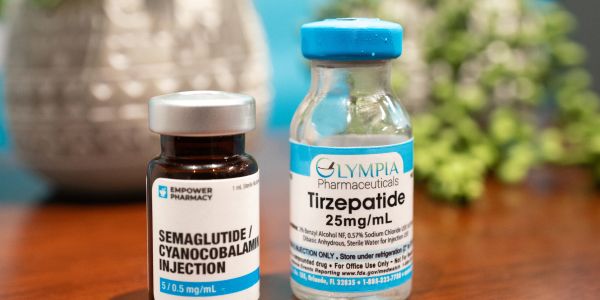
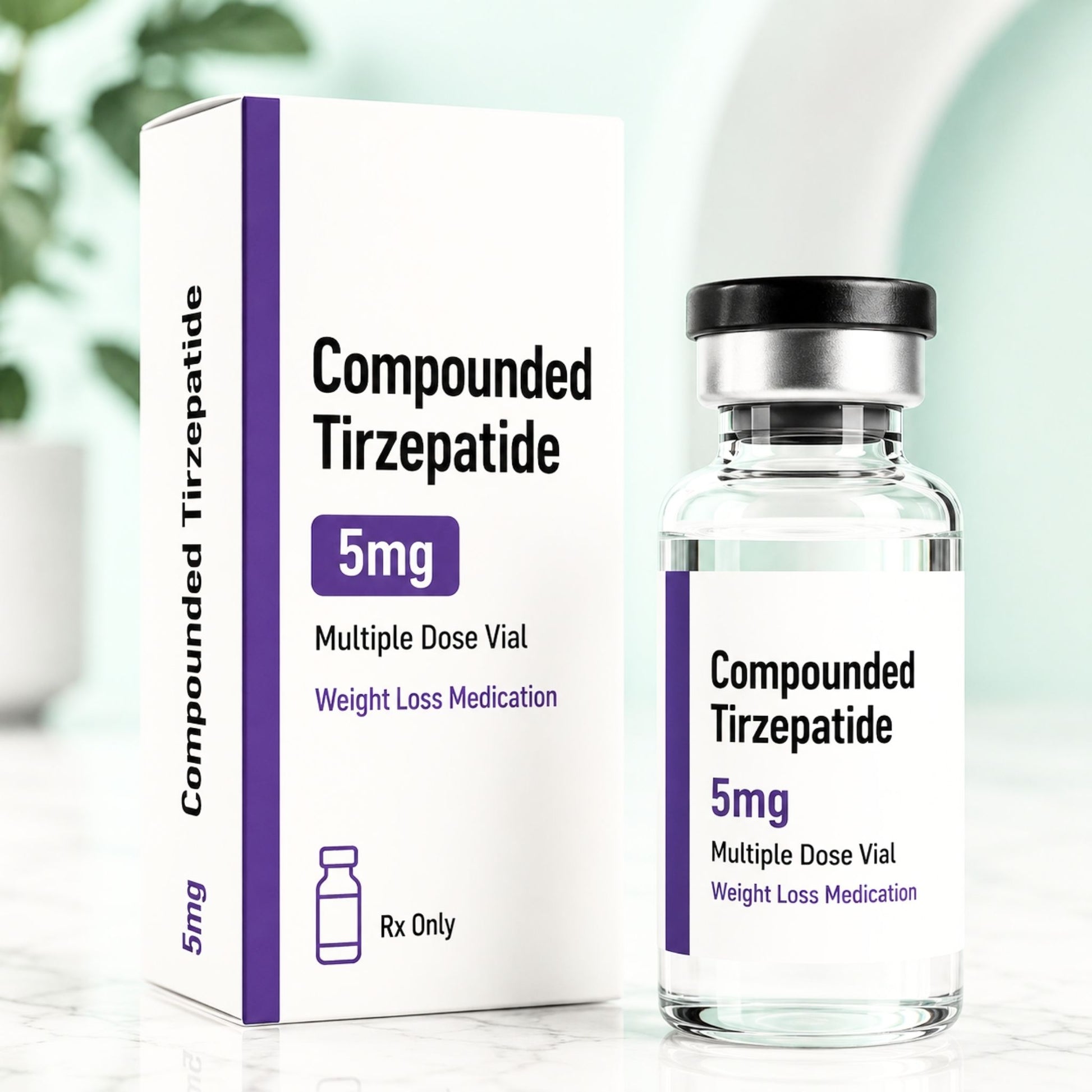
Pricing landscape (Q1 2026): FormBlends compounded tirzepatide: $179 to $279 per month (dose-dependent, no insurance) Other telehealth platforms: $199 to $549 per month Local 503A compounding pharmacies: $150 to $375 per month 503B outsourcing facilities: $180 to $320 per month How compounded tirzepatide differs from brand-name Mounjaro: Not FDA-approved (prepared under state pharmacy board oversight, not FDA approval) Drawn from a vial with a syringe rather than delivered via pre-filled pen Typically costs 75% to 85% less than brand-name cash price Prepared by a licensed compounding pharmacy in response to an individual prescription Not interchangeable with Mounjaro (different product, different regulatory pathway) When compounded makes financial sense: Your insurance doesn't cover Mounjaro Your copay exceeds $200 per month even with the savings card You're in the Medicare donut hole paying $500+ per month You want predictable monthly pricing without prior authorization delays You don't qualify for the savings card or Lilly Cares When brand-name Mounjaro makes more sense: Your copay is $75 or less with the savings card You qualify for Lilly Cares and can get Mounjaro free You strongly prefer FDA-approved medications You need the convenience of a pre-filled pen Your insurance covers Mounjaro with minimal hassle The FDA shortage consideration: Compounded tirzepatide is legal only during an FDA-declared shortage of the brand-name product

Phone: 607.253.3552
Food and Drug Administration, one for weight loss (Saxenda) and the other for diabetes (Victoza)
Injectable glutathione may contribute to skin appearance as part of comprehensive skin health strategies, but it should not be viewed as a substitute for fundamental skincare practices including sun protection, proper hydration, and appropriate topical skincare
Key ingredients, side effects, frequency of use, efficacy, availability, cost, insurance coverage, and more can all vary depending on the exact medication